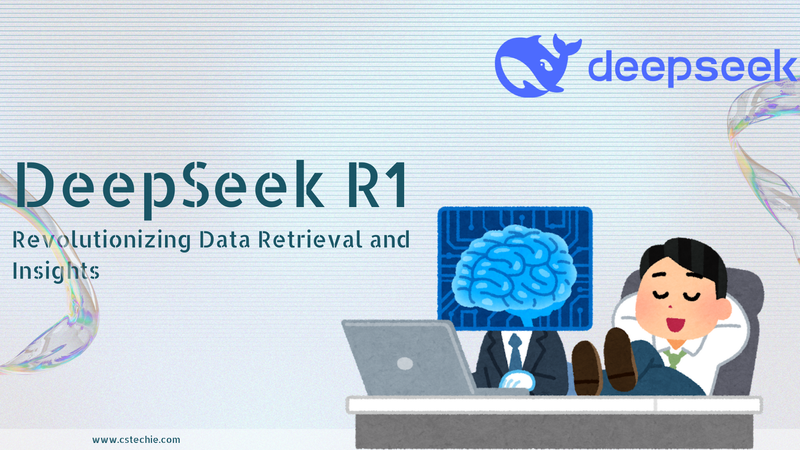
DeepSeek R1: Revolutionizing Data Retrieval and Insights
Inside DeepSeek-R1: Exploring the AI Assistant Changing How We Learn and Create
Artificial intelligence is no longer science fiction—it’s in our pockets, browsers, and daily workflows. As someone who’s spent months interacting with AI tools, I wanted to dive deep into one standout model:DeepSeek-R1. Here’s what makes this AI assistant unique and how it’s reshaping digital interactions.
What Is DeepSeek-R1?
Developed by the Chinese AI company DeepSeek, DeepSeek-R1 is a large language model (LLM) designed to be a versatile, ethical, and highly capable assistant. Unlike generic chatbots, it specializes in tasks requiringprecision(coding, math) andcreativity(writing, design), all while prioritizing user safety.
Key Features of DeepSeek R1:
Multimodal Mastery
While text-based, DeepSeek-R1 can generate images through code (SVG, ASCII art), solve equations step-by-step, and even debug programming errors. Try asking it to“explain quantum physics using cooking metaphors”—you’ll see its knack for creative teaching.
Ethical Guardrails
The model refuses harmful requests and flags biased assumptions. For instance, if you ask for medical advice, it will redirect you to consult professionals—a critical safeguard in today’s AI landscape.
Contextual Awareness
During my tests, it remembered thread-specific details across long conversations, like adjusting code snippets iteratively or refining a story’s plot over multiple prompts.
Under the Hood: How It Works
DeepSeek-R1 runs on atransformer architecture, trained on a vast corpus of:
Academic papers (STEM, humanities)
Licensed literature and code repositories
Multilingual datasets
What surprised me was itsdynamic resource allocation: complex queries trigger deeper neural network pathways, while simpler ones use optimized “fast lanes” for efficiency.
Real-World Use Cases
Students: It generates practice problems (with solutions) for topics like calculus or Python.
Developers: Debugging assistance with line-by-line explanations.
Writers: Brainstorming character arcs or translating idioms across languages.
Curious Minds: Instant breakdowns of trending topics (e.g.,“Explain Web3 like I’m 10”).
Limitations:
No Real-Time Data: It can’t fetch live sports scores or stock prices.
Creative Boundaries: While it writes poetry, the output lacks human spontaneity.
Memory Limits: Conversations reset after long threads, requiring users to recontextualize.